
AI Automation Tools for Service-Based Businesses
Service-based businesses live and die by efficiency.
Whether you run a marketing agency, consulting firm, coaching business, legal practice, accounting firm, or development agency, your margins depend on how efficiently you deliver services.
After years working with SaaS affiliate ecosystems through Impact and PartnerStack — testing automation tools inside real funnels, agency operations, and B2B workflows — one thing is clear:
AI automation tools are no longer optional. They are leverage multipliers.
Businesses that automate intelligently:
- Reduce operational overhead
- Increase client capacity
- Improve response times
- Increase profit per client
- Scale without hiring too fast
This guide explains how to choose and implement the best AI automation tools for service-based businesses, based on real performance experience — not generic hype.
Why AI Automation Matters for Service Businesses
Unlike product-based companies, service businesses depend heavily on:
- Time
- People
- Manual processes
- Communication
- Follow-ups
- Client onboarding
- Reporting
Without automation, growth means hiring.
With automation, growth means scaling systems.
AI automation tools can handle:
- Lead qualification
- Appointment booking
- Email follow-ups
- Proposal generation
- CRM updates
- Task assignment
- Client onboarding
- Reporting summaries
Done properly, automation increases capacity without proportionally increasing payroll.
Where Most Service Businesses Waste Time
From operational audits across multiple affiliate-backed SaaS tools, the biggest time drains are:
- Manual lead follow-ups
- Repetitive onboarding emails
- Data entry into CRM
- Proposal formatting
- Client reminders
- Reporting creation
- Social media scheduling
- Support ticket responses
AI automation tools eliminate repetitive cognitive load.
1. AI-Powered CRM Automation
Your CRM should be more than a contact database.
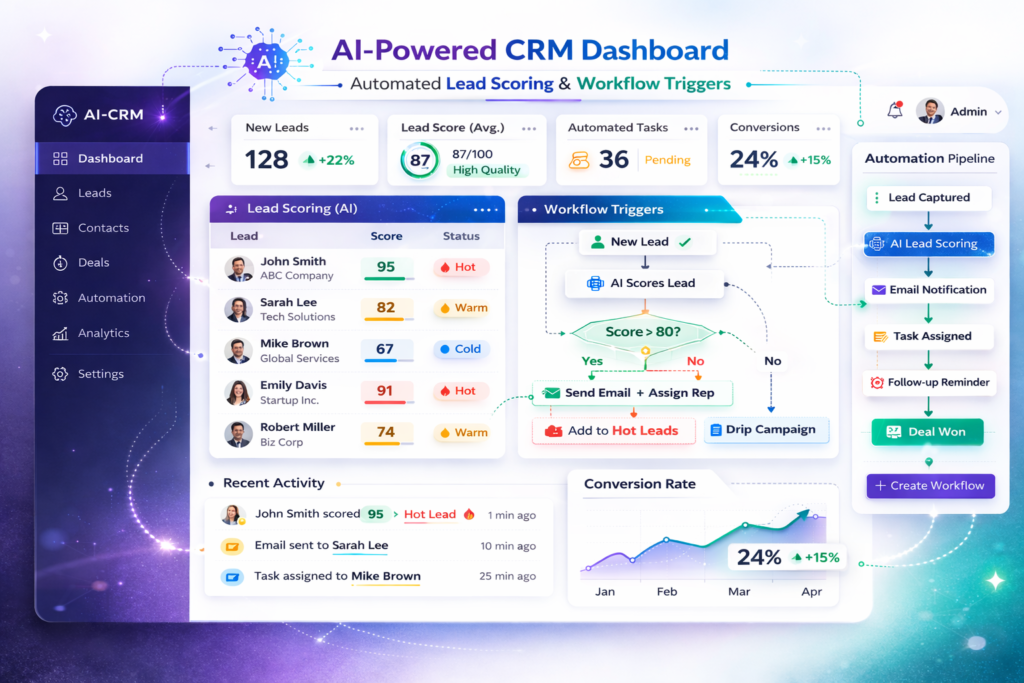
Modern AI automation inside CRM platforms can:
- Auto-score leads
- Predict deal closure probability
- Trigger automated workflows
- Assign leads intelligently
- Send behavioral email sequences
- Update pipeline stages automatically
For service-based businesses, this reduces:
- Missed follow-ups
- Sales bottlenecks
- Manual lead sorting
When promoting CRM tools via affiliate networks, I’ve consistently seen automation depth drive retention and recurring revenue — because businesses quickly become dependent on workflow efficiency.
2. AI Email Automation Tools
Email remains one of the highest ROI channels.
AI automation tools now allow:
- Behavioral email triggers
- Smart send-time optimization
- Dynamic content personalization
- Automated follow-up sequences
- Lead nurturing workflows
- Client onboarding automation
For agencies and consultants, onboarding sequences can be fully automated:
- Welcome email
- Intake form request
- Contract reminder
- Payment confirmation
- Kickoff scheduling
Automation ensures no client is left unattended.
In affiliate-heavy funnels, segmented automation increases conversion significantly compared to broadcast campaigns.
3. AI Chatbots & Conversational Automation
Service businesses often lose leads outside business hours.
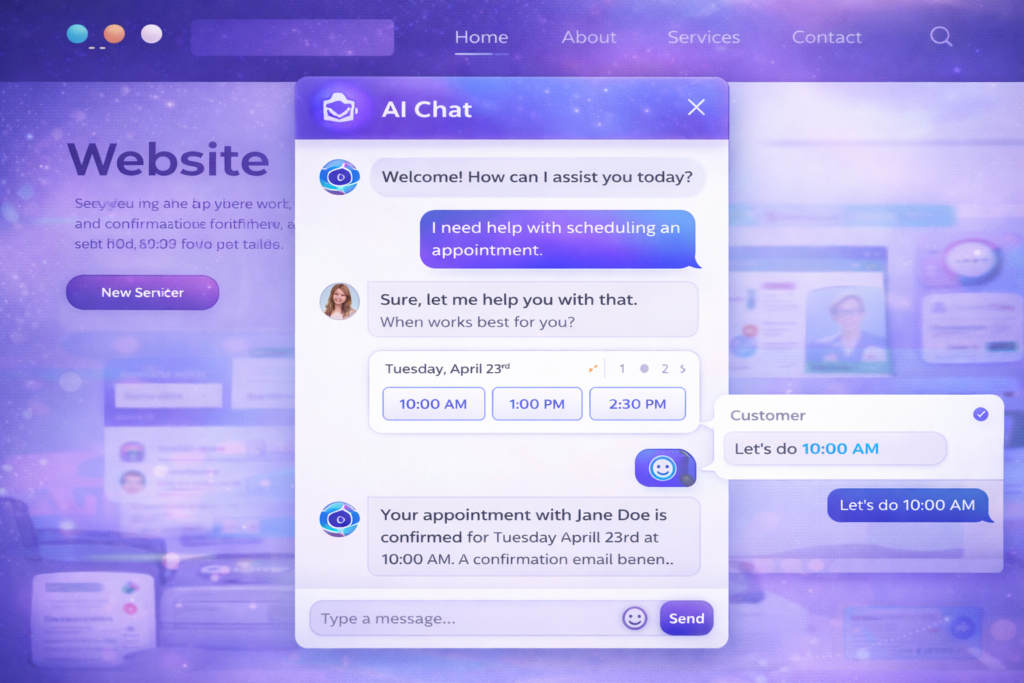
AI chatbots can:
- Qualify leads
- Answer FAQs
- Schedule appointments
- Route inquiries
- Collect contact details
- Trigger CRM workflows
24/7 automation increases lead capture.
But not all chatbot tools are equal.
Look for:
- CRM integration
- Conditional logic
- Human handoff capability
- Analytics tracking
Poor chatbot implementation damages brand trust.
4. AI Scheduling & Appointment Automation
Manual scheduling wastes time.
AI scheduling tools:
- Sync calendars
- Auto-detect availability
- Send reminders
- Reschedule automatically
- Reduce no-shows
- Integrate with CRM
For consultants and agencies, reducing scheduling friction increases close rates.
In affiliate SaaS promotions, scheduling tools convert well because they solve immediate pain points.
5. AI Proposal & Document Automation
Creating proposals manually consumes hours.
AI tools now:
- Generate proposal drafts
- Customize based on client inputs
- Auto-fill pricing
- Embed e-signatures
- Track document engagement
Service businesses can reduce proposal creation time by 70% or more.
Automation accelerates deal velocity.
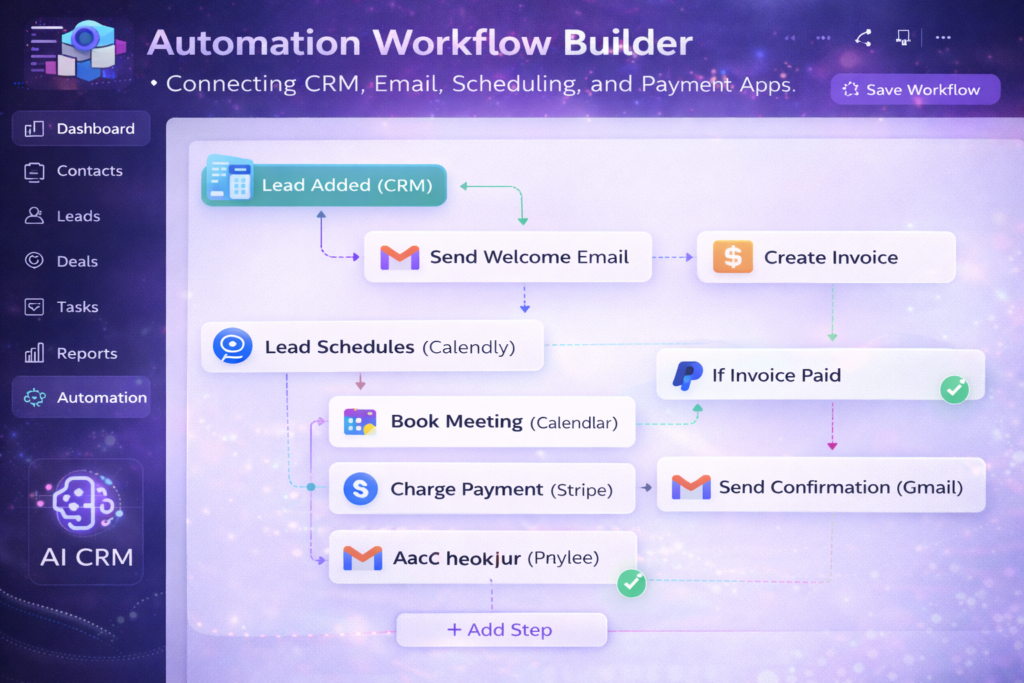
6. AI Workflow Automation Platforms
General automation platforms connect multiple apps.
Examples of automation include:
- When form submitted → Add to CRM → Send email → Assign task
- When invoice paid → Update project board → Notify team
- When deal closes → Trigger onboarding workflow
These tools act as automation bridges between systems.
Look for:
- Pre-built templates
- Multi-step workflows
- Error handling
- Real-time triggers
- Secure API connections
Without workflow automation, teams rely on manual handoffs.
7. AI Content & Reporting Automation
Service-based businesses constantly create:
- Reports
- Campaign summaries
- Performance updates
- Blog content
- Social posts
AI tools can:
- Generate client reports
- Summarize analytics
- Draft blog posts
- Repurpose content
- Create captions
Automation reduces content production time significantly.
But human review remains essential for quality control.
8. AI Customer Support Automation
Support automation tools can:
- Auto-categorize tickets
- Suggest responses
- Trigger workflows
- Route tickets
- Provide AI-generated solutions
For growing service businesses, this reduces support staffing pressure.
How to Choose the Right AI Automation Tools
When evaluating AI automation tools for service-based businesses, consider:
1. Integration Depth
Does it integrate with:
- CRM
- Email platform
- Payment processor
- Project management tool
- Calendar
- Analytics tools
Integration failure breaks automation chains.
2. Scalability
Will pricing scale sustainably as:
- Clients increase
- Team members grow
- Workflow volume expands
Per-task pricing can become expensive quickly.
3. Ease of Implementation
Complex tools slow adoption.
Choose tools with:
- Visual workflow builders
- Templates
- Documentation
- Support access
4. Data Security
AI tools process sensitive data.
Verify:
- Encryption
- Compliance
- Data storage policies
- Access controls
Common Mistakes When Implementing AI Automation
- Automating broken processes
- Overcomplicating workflows
- Ignoring integration testing
- Skipping training
- Not monitoring results
Automation amplifies both efficiency and chaos. Structure first, automate second.
AI Automation ROI for Service Businesses
AI automation impacts:
- Revenue per employee
- Client capacity
- Lead response speed
- Conversion rates
- Operating margin
When implemented properly, AI automation reduces:
- Administrative overhead
- Human error
- Manual duplication
In affiliate-backed SaaS ecosystems, businesses that fully implement automation rarely churn. Efficiency becomes addictive.
AI Automation Tools Checklist
Before adopting:
☑ Identified repetitive processes
☑ Mapped workflow dependencies
☑ Verified integrations
☑ Modeled pricing growth
☑ Tested automation in sandbox
☑ Trained team
☑ Monitored performance
Automation should increase clarity — not complexity.
Final Thoughts
AI automation tools for service-based businesses are not just productivity enhancements.
They are growth multipliers.
Service businesses that automate intelligently:
- Increase capacity without hiring too fast
- Reduce burnout
- Improve client experience
- Protect margins
- Scale sustainably
But automation must be strategic.
Choose tools based on integration, scalability, workflow fit, and long-term ROI — not hype.
Frequently Asked Questions (FAQ)
What are the best AI automation tools for service-based businesses?
The best tools depend on workflow needs, but CRM automation, email automation, scheduling, and workflow platforms are foundational.
Can AI automation replace employees?
AI automation reduces repetitive tasks but still requires strategic oversight and human decision-making.
Is AI automation expensive?
Costs vary by usage and features. Model growth scenarios before committing.
How long does implementation take?
Small businesses can implement core automation in 2–4 weeks. Larger systems require longer.
Does AI automation improve client retention?
Yes, faster response times and consistent workflows improve overall client experience.

One Comment
Comments are closed.