Software Buying Checklist for Entrepreneurs
Entrepreneurs don’t fail because of bad tools. They fail because they choose tools without a system.
Every new software subscription affects:
- Cash flow
- Operational efficiency
- Team productivity
- Data security
- Long-term scalability
This guide provides a structured software buying checklist for entrepreneurs to prevent costly mistakes and improve ROI on every software investment.
Why Entrepreneurs Need a Structured Buying Process
Early-stage businesses often:
- Buy tools reactively
- Overpay for unused features
- Duplicate functionality
- Ignore integration limits
- Lock into annual contracts too early
A disciplined evaluation process protects margin and accelerates growth.
Step 1: Define the Core Business Problem
Before comparing vendors, clarify:
- What exact problem are we solving?
- Is this a revenue problem or efficiency problem?
- What happens if we don’t solve it now?
- Is software the best solution?
If the problem is unclear, no tool will fix it.
Step 2: Identify Required vs. Optional Features
Avoid feature overload.
Separate features into:
Must-Have
- Essential to operations
- Directly tied to ROI
Nice-to-Have
- Helpful but not critical
- Cosmetic or advanced features
Entrepreneurs often overpay for advanced features they never use.
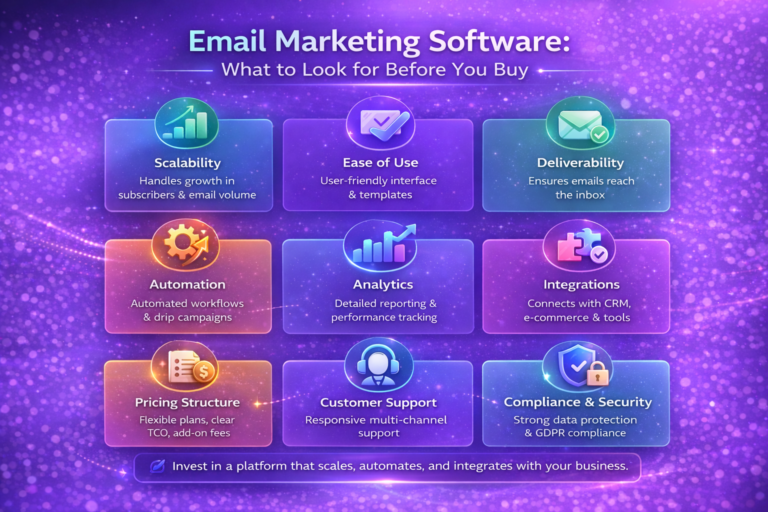
Step 3: Evaluate Pricing Structure Carefully
Don’t focus only on the monthly price.
Assess:
- Per-user vs usage-based pricing
- Upgrade thresholds
- Add-on costs
- API or storage limits
- Annual contract lock-ins
- Renewal price increases
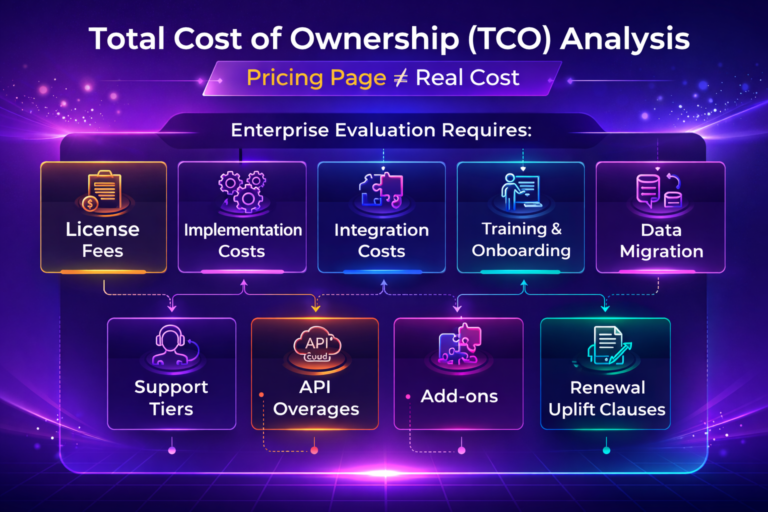
Calculate Total Cost of Ownership (TCO):
Subscription Cost
- Implementation
- Integrations
- Training
- Add-ons
- Growth scaling
Cheap software with hidden costs becomes expensive quickly.
Step 4: Check Scalability
Ask:
- Will this tool still work when we 3× in size?
- Does pricing scale sustainably?
- Are enterprise upgrades flexible?
- Are there performance limits?
Switching software during growth is disruptive and expensive.
Step 5: Review Integration Capabilities
Software rarely operates alone.
Confirm:
- Native integrations
- API availability
- Webhooks support
- Compatibility with your current stack
- Data export capability
Closed ecosystems create dependency risk.
Step 6: Assess Security & Compliance
Even small businesses handle sensitive data.
Evaluate:
- Data encryption standards
- Role-based access control
- Audit logs
- Backup policies
- Compliance certifications (if applicable)
Security mistakes destroy trust faster than pricing mistakes.
Step 7: Analyze Vendor Reliability
Entrepreneurs often overlook vendor risk.
Check:
- Years in operation
- Funding or financial stability
- Customer reviews
- Product roadmap transparency
- Support responsiveness
If a vendor shuts down or pivots, your operations are affected.
Step 8: Test Before Committing
Never rely solely on marketing pages.
Use:
- Free trials
- Sandbox accounts
- Demo calls
- Real workflow testing
Evaluate usability under real business conditions.
Step 9: Calculate Expected ROI
Every software purchase should answer:
- Will this increase revenue?
- Will this reduce costs?
- Will this save measurable time?
- What is the payback period?
If ROI is unclear, reconsider.
Step 10: Negotiate Before Buying
Even entrepreneurs can negotiate.
You can request:
- Extended trials
- Onboarding support
- Volume discounts
- Flexible contract terms
- Early termination clauses
SaaS pricing is often flexible — especially annually.
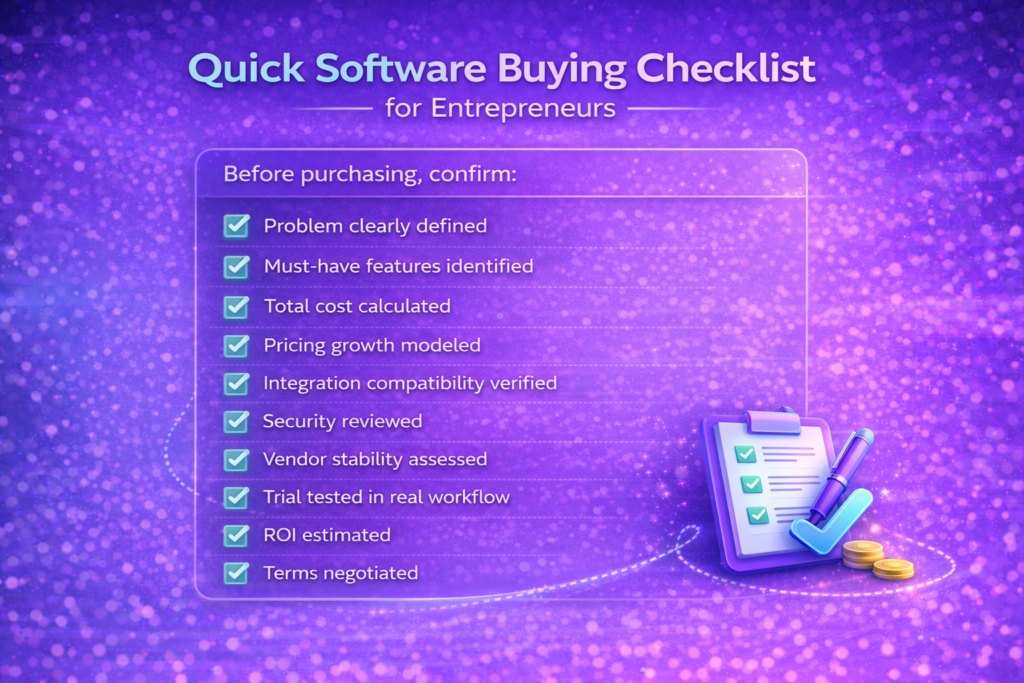
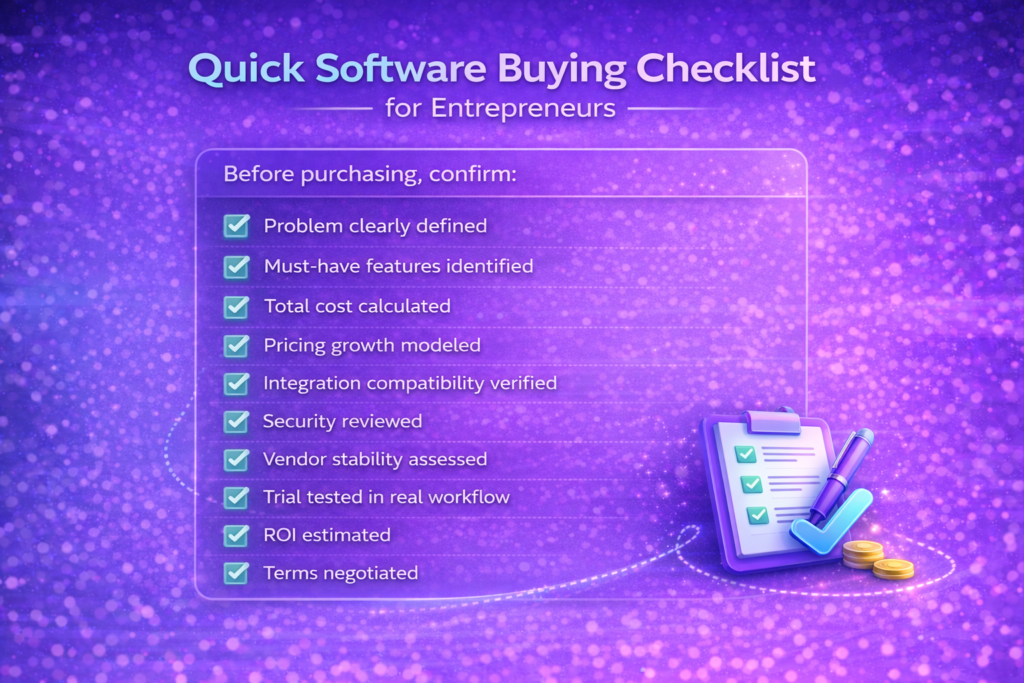
Quick Software Buying Checklist for Entrepreneurs
Before purchasing, confirm:
☑ Problem clearly defined
☑ Must-have features identified
☑ Total cost calculated
☑ Pricing growth modeled
☑ Integration compatibility verified
☑ Security reviewed
☑ Vendor stability assessed
☑ Trial tested in real workflow
☑ ROI estimated
☑ Terms negotiated
Common Software Buying Mistakes Entrepreneurs Make
- Buying based on hype
- Choosing feature-heavy enterprise plans too early
- Ignoring scalability limits
- Overlooking integration restrictions
- Locking into long-term contracts prematurely
Disciplined buying creates operational leverage.
Final Thoughts
Software should accelerate growth — not create hidden cost structures.
Entrepreneurs who apply a structured software buying checklist:
- Preserve cash flow
- Avoid migration headaches
- Improve operational efficiency
- Increase long-term profitability
Buying software is a strategic decision, not a convenience decision.