
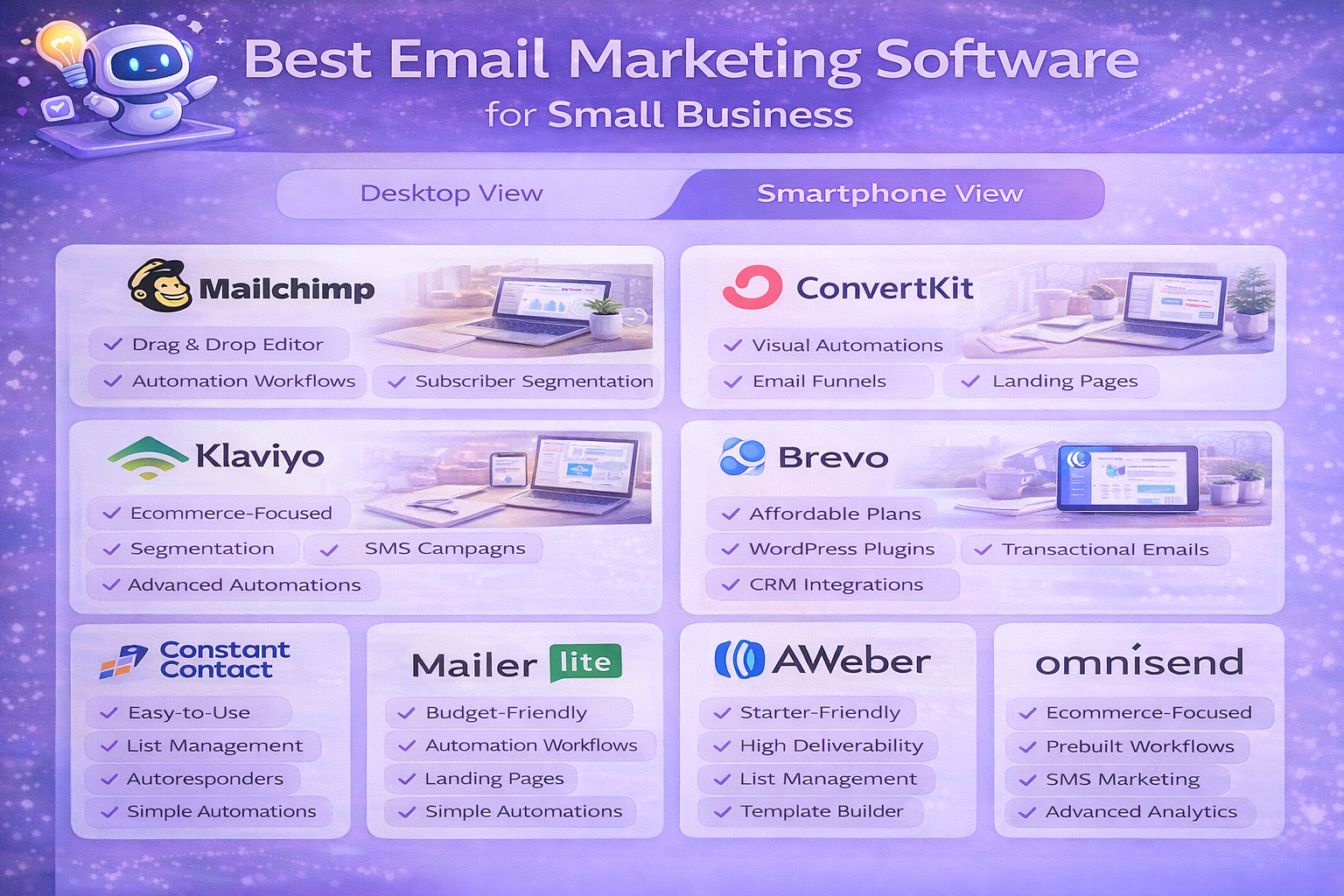
Best Email Marketing Software for Small Business
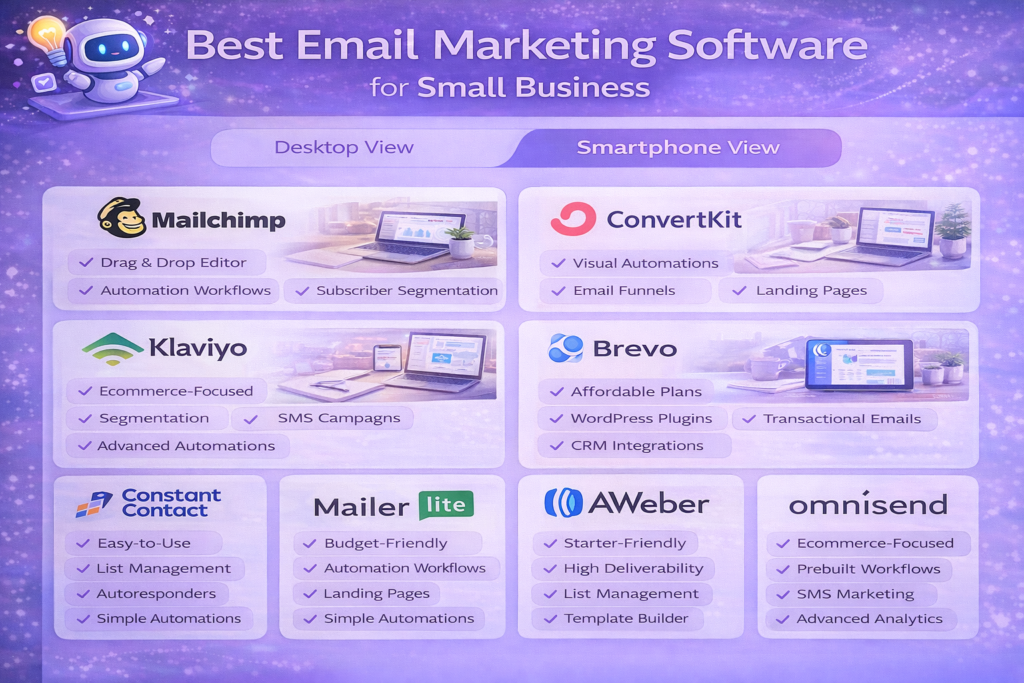
Choosing the best email marketing software for small business is not about picking the most popular brand. It’s about selecting a platform that aligns with your growth model, automation needs, and long-term profitability.
After years promoting SaaS tools through affiliate networks like Impact and PartnerStack — and testing multiple email platforms across ecommerce stores, agencies, local service businesses, and SaaS startups — one pattern is clear:
Small businesses rarely fail at email marketing because of strategy.
They fail because they choose the wrong platform.
This guide breaks down the best email marketing software for small business based on:
- Deliverability
- Automation depth
- Ease of use
- Integration
- Pricing scalability
- Affiliate-friendliness
- Long-term ROI
If you’re publishing this on WordPress, this structure is optimized for SEO ranking, featured snippets, and user engagement.
Why Email Marketing Still Dominates for Small Businesses
Email consistently delivers one of the highest ROIs in digital marketing.
For small businesses, email marketing enables:
- Lead nurturing
- Customer retention
- Automated sales
- Abandoned cart recovery
- Client onboarding
- Upsells & cross-sells
Unlike social media algorithms, email gives you ownership of your audience.
The key is choosing the right software.
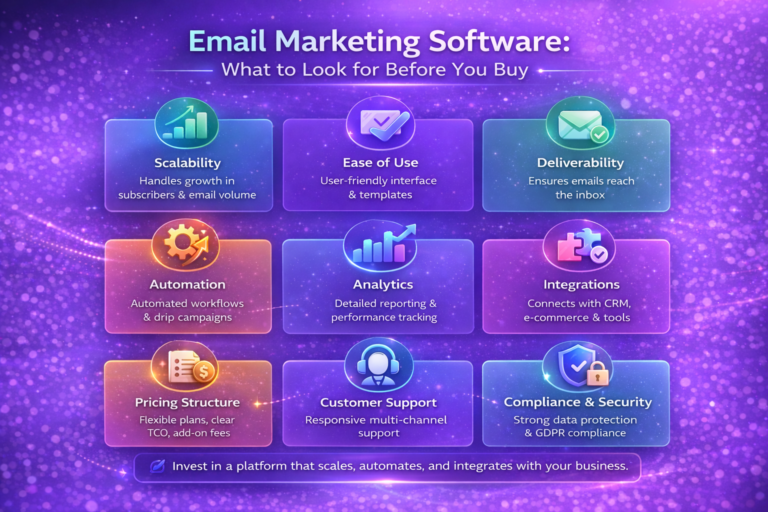
What Makes the Best Email Marketing Software for Small Business?
Before listing platforms, let’s define evaluation criteria.
1. Deliverability Infrastructure
If emails don’t reach inboxes, nothing else matters.
Look for:
- SPF, DKIM, DMARC support
- Dedicated IP options
- Reputation monitoring
- Inbox placement analytics
In affiliate campaigns, even a 5% drop in inbox placement can significantly reduce earnings.
2. Automation Capabilities
Basic newsletters are outdated.
You need:
- Behavioral triggers
- Visual workflow builders
- Conditional logic
- Tag-based segmentation
- Sales funnel automation
Automation increases revenue without increasing workload.
3. Pricing Scalability
Small businesses often start small — but grow quickly.
Avoid:
- Steep pricing jumps
- Automation paywalls
- Hidden subscriber charges
Model pricing for 12–24 months.
4. Integration Ecosystem
Email software must integrate with:
- WordPress
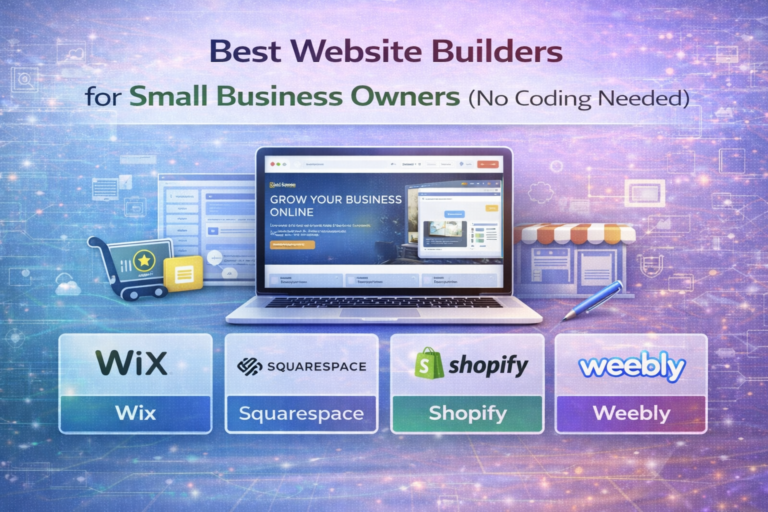
- WooCommerce or Shopify
- CRM
- Payment systems
- Webinar tools
- Affiliate tracking platforms
Broken integrations disrupt tracking and automation.
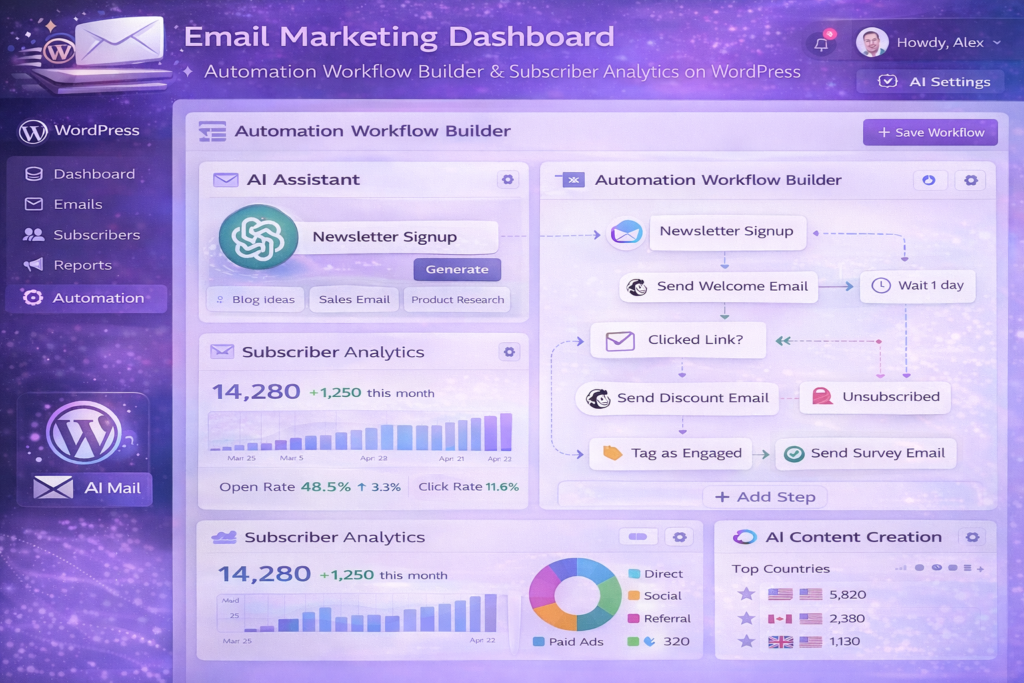
Best Email Marketing Software for Small Business (Top Categories)
Rather than ranking blindly, we’ll categorize by use case.
1. Best for Beginners & Simplicity
Ideal for:
- Solopreneurs
- Bloggers
- Freelancers
- Local businesses
These platforms offer:
- Drag-and-drop editors
- Simple automation
- Affordable starter plans
- Easy WordPress integration
Pros:
- Quick setup
- User-friendly interface
- Low learning curve
Cons:
- Limited advanced automation
- Less flexibility for scaling
For early-stage small businesses, simplicity often wins.
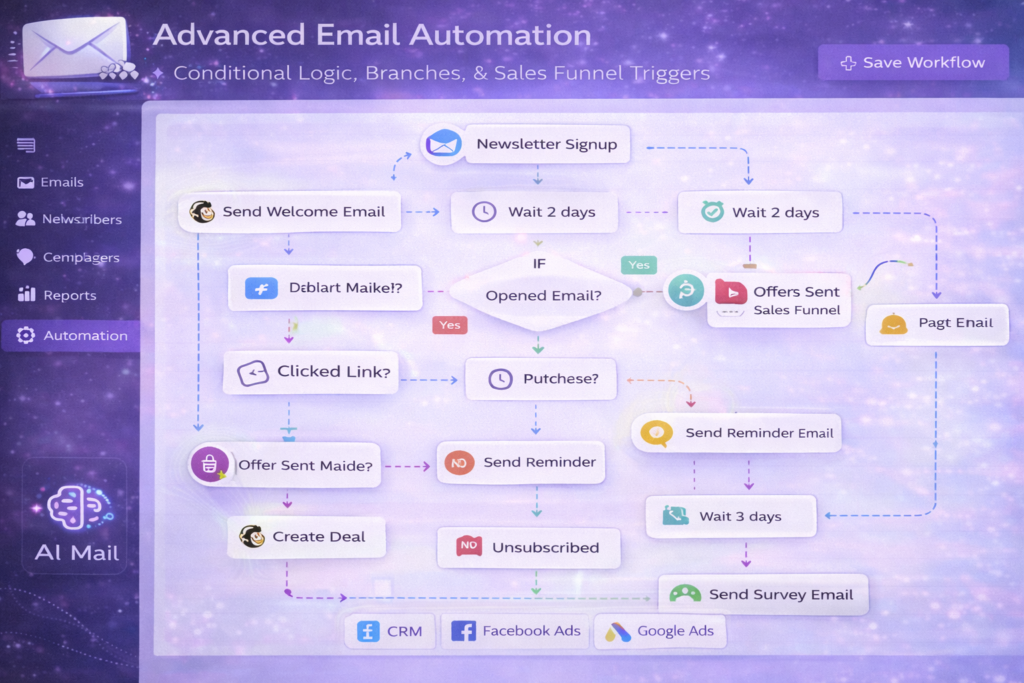
2. Best for Advanced Automation & Sales Funnels
Ideal for:
- Agencies
- Coaches
- Course creators
- Affiliate marketers
- SaaS founders
Features to look for:
- Multi-step workflows
- Behavioral triggers
- Sales funnel tracking
- Advanced segmentation
- Revenue attribution
In PartnerStack-backed SaaS campaigns, advanced automation tools consistently produce higher lifetime value per subscriber.
These platforms cost more — but ROI is higher.
3. Best for Ecommerce Small Businesses
Ecommerce requires specific features:
- Abandoned cart recovery
- Product recommendations
- Customer lifetime value tracking
- Purchase-based segmentation
- Dynamic discount campaigns
Automation tied to shopping behavior increases revenue significantly.
If you run WooCommerce or Shopify, choose a platform with native integration.
4. Best for Local Service Businesses
Local businesses need:
- Appointment reminders
- Follow-up automation
- Review request campaigns
- Customer reactivation sequences
Automation helps generate repeat business without manual outreach.
Deep Comparison: What to Analyze Before Buying
Automation Limits
Some platforms restrict:
- Number of automation workflows
- Triggers per month
- Tags per subscriber
Check limitations carefully.
Subscriber Counting Policies
Some tools count:
- Unsubscribed contacts
- Inactive subscribers
- Duplicate records
This inflates costs.
Email Sending Limits
Verify:
- Monthly email caps
- Overages
- Throttling policies
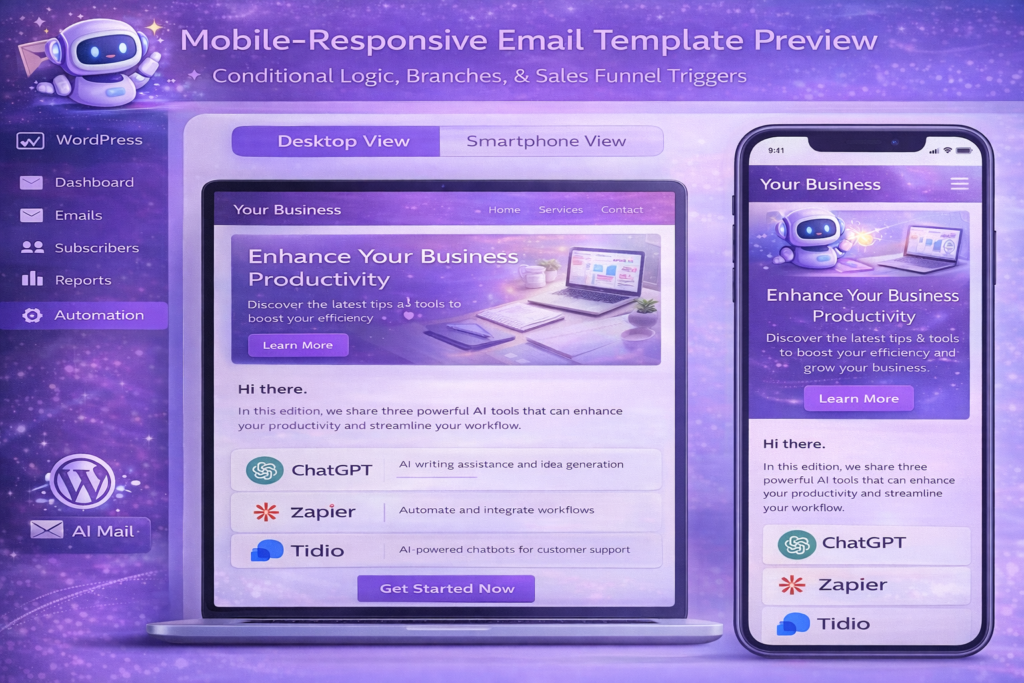
Template Flexibility
Does it allow:
- Mobile optimization
- Custom HTML
- Dynamic content blocks
Poor templates reduce engagement.
Affiliate & Revenue Perspective
From years of working within Impact and PartnerStack ecosystems, here’s what most small businesses don’t consider:
Email software affects affiliate revenue stability.
If:
- Deliverability drops
- Automation breaks
- Tracking pixels fail
- Integrations disconnect
Revenue tracking suffers.
Platforms with strong API documentation and webhook support perform better long-term.
Recurring SaaS commissions often depend on customer retention — and retention depends on software reliability.
Choose platforms built for longevity.
Cost Modeling Example
Let’s say:
You start with 1,000 subscribers.
If your list grows to 10,000 within a year:
- Will pricing remain manageable?
- Does the plan upgrade automatically?
- Does automation remain unlocked?
- Does support level improve?
Many small businesses underestimate scaling costs.
Plan forward.
Implementation Strategy for WordPress Users
If you’re publishing via WordPress:
- Install official integration plugin
- Connect via API key
- Set up forms
- Create lead magnet
- Build welcome automation
- Add segmentation tags
- Test deliverability
WordPress integration should be seamless.
Common Mistakes When Choosing Email Marketing Software
- Choosing cheapest plan only
- Ignoring automation depth
- Skipping deliverability research
- Overlooking scaling costs
- Not testing support response
- Choosing based on affiliate hype
Always test with a trial.
Email Marketing Software Buying Checklist
Before committing:
☑ Verified deliverability infrastructure
☑ Tested automation workflows
☑ Modeled pricing growth
☑ Confirmed WordPress integration
☑ Checked subscriber counting policy
☑ Reviewed compliance tools
☑ Evaluated analytics depth
☑ Tested customer support
Structured evaluation prevents future migration headaches.
When to Upgrade Your Email Platform
Consider upgrading if:
- Automation limits restrict growth
- Deliverability declines
- Segmentation is shallow
- Integration gaps appear
- Reporting lacks revenue insights
Migration is disruptive — choose strategically.
Final Thoughts
The best email marketing software for small business is not the most advertised.
It’s the one that:
- Delivers emails reliably
- Automates intelligently
- Integrates smoothly
- Scales affordably
- Supports long-term growth
Email remains a core growth engine.
Choose a platform that enhances leverage — not complexity.
Frequently Asked Questions (FAQ)
What is the best email marketing software for small business?
The best software depends on your needs — beginners need simplicity, while growing businesses require advanced automation and segmentation.
How much does email marketing software cost?
Costs vary by subscriber count and features. Model long-term pricing before choosing.
Can small businesses use free email marketing tools?
Yes, for testing. But advanced automation usually requires paid plans.
Is email marketing still effective in 2026?
Yes. Email consistently delivers one of the highest returns on investment across digital channels.
How many subscribers do I need before upgrading?
Upgrade when automation or segmentation limits restrict revenue growth.

One Comment
Comments are closed.